
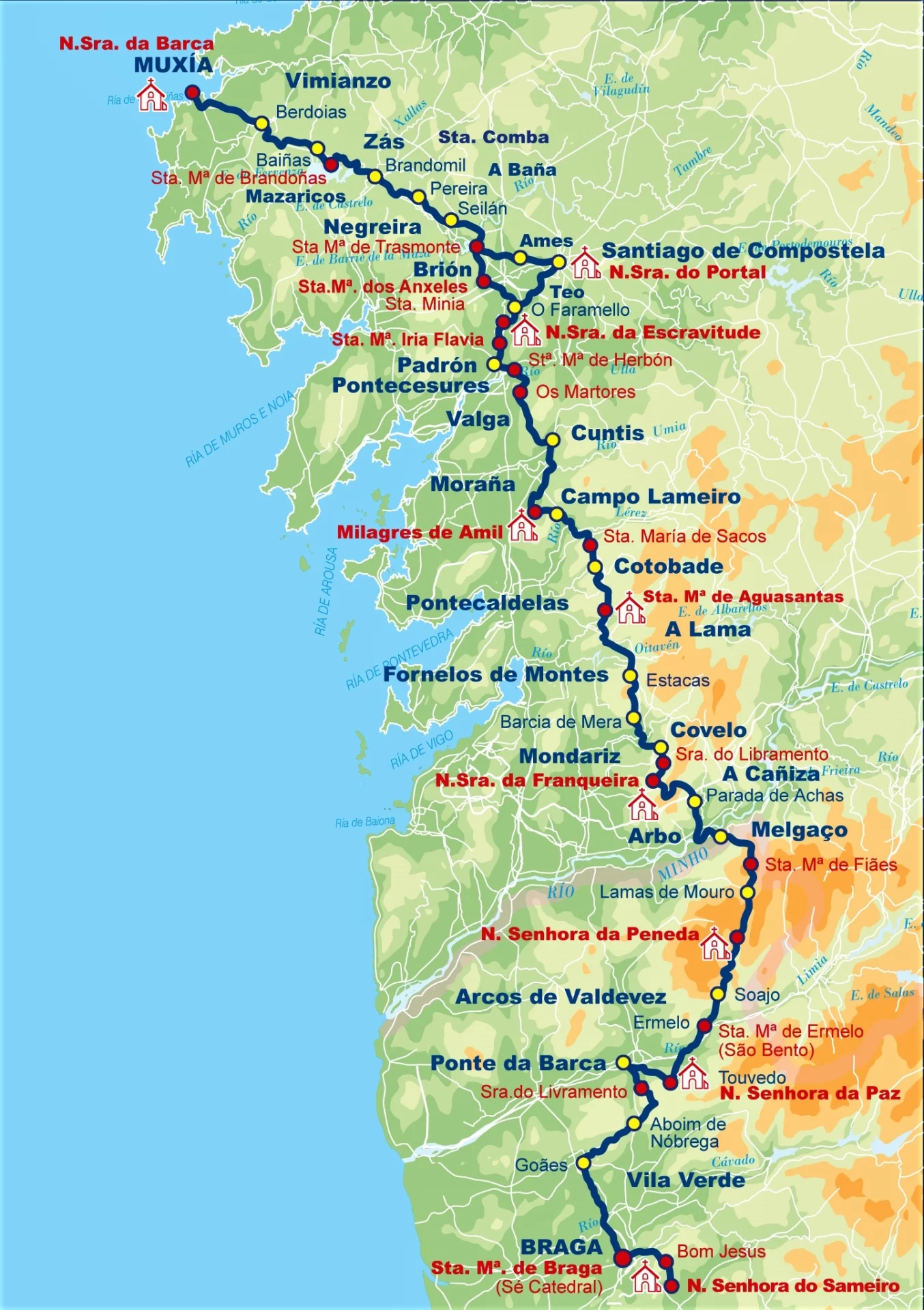
This route gained importance especially from the 12th century, after independence from Portugal.
It is heir to ancient routes and roads, such as the Via XIX, built in the 1st century A.D., which connected Braga with Astorga via the Bridge of Lima, Tui, Pontevedra, Santiago and Lugo, and which was one of the most important Roman roads, as it formed the main structure of Gallaecia.
From the 12th century onwards, the luxury of pilgrims to the north of the peninsula allowed for the establishment of not only spiritual, but also cultural and economic ties, human ties that political borders could never break. The example of kings, nobles and high clerics contributed decisively to the creation of a strong Jacobite devotion, a phenomenon so important that the Portuguese road network itself was conceived in the same way, passing through the places that the Portuguese Way had established on its way to Galicia: Lisbon, Santarem, Coimbra, Porto, Barcelos, Ponte de Lima and Valença do Minho, where the route crosses the river Minho on its way into Galicia.